Blog Archive

Study of My Workspace #3:
The Eye of the Avatar

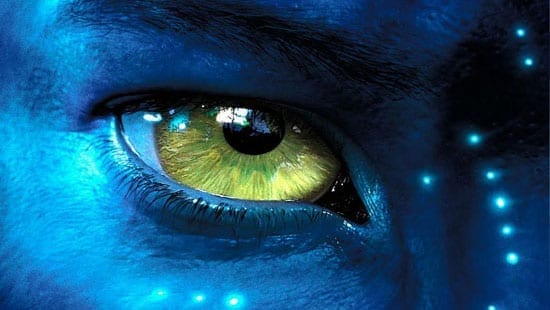
The item in my workspace that gets the most comments is a poster I have of a close-up of one of the eyes of the character Jake Sully from the recent blockbuster Avatar. People ask me, “That poster is quite powerful. Where did you get it?” Or they wonder, “Why did you hang up that poster? It’s very striking; there must be a special reason you have it.”

Actually, I really enjoyed watching Avatar, and was touched by its message. Every time my eye catches this poster, I feel inspired again. That’s why I put it where I can see it easily. It reminds me to stay alert, and keep an eye on myself.

When you look at the poster, what does it say to you? How does the eye make you feel?

Jake Sully's eye from Avatar

Poster of the eye of Jake Sully in the movie Avatar

It reminds me that there are always many eyes watching us and evaluating us. We are conscious of those eyes and the judgment that usually accompany them. Consciously and unconsciously, they often affect our thoughts and actions.

One pair of ever-observant eyes comes from ourselves. We are especially conscious of these eyes. Actually, we have more than one pair of internal eyes evaluating us. There are the eyes of our small self, and there are the eyes I am most interested in—the eternal eyes of “absolute consciousness” that come from the center of your inner self.

I first experienced Oneness by looking through those eyes. It took 21 days of ascetic practice on Moak Mountain in Korea to do it. In that moment of enlightenment, I saw a myriad of people, including myself, trapped within the matrix of conventionalities we create for ourselves in this world. Absolute consciousness exists outside of that matrix in the full nothingness beyond all time, space, and matter. It is like the loving spirit of Eywa in the movie Avatar, which was the essence of everything.

The moment I saw the giant eye in the poster, I felt the eyes of absolute consciousness upon me. Our conscience comes from absolute consciousness. The eyes of absolute consciousness are the eyes of our conscience. When I look at myself through these eyes, I think and act the same regardless of whether or not I am with other people. I feel a kind of steadfastness even in the midst of an endlessly changing world. It makes me realize that if everyone could see themselves through the eyes of absolute consciousness, the whole world would become more peaceful.

Yet, many people don’t realize that there are eyes inside watching themselves in every situation. They are different when they are by themselves and when they feel that others are watching them. Some may even try to deceive people, believing that others won’t realize it.

On the other hand, some people are in touch with their conscience. They are conscious enough to know how to watch themselves, and are honest and sincere in word and deed. They are aware of the connectedness of all things and so work to benefit the world.

Now when you look into the eye of the Avatar poster, can you feel the clear and bright eye of absolute consciousness looking out from your inner self? When you see the world through this eye, it’s easier to live by your conscience. I think when more and more people wake up their conscience, the world will finally change. That is the hope I cherish.

Study of My Workspace #2:
A Life of Honest Poverty or Honest Wealth?

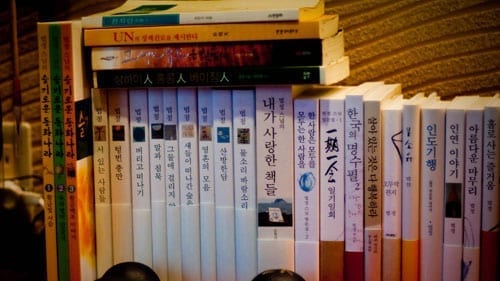
Right now in my room I have many books written by the Korean Buddhist monk named the Venerable Beopjeong. His books are very popular in Korea, and I like to read them often because his elegant writing reflects his heartfelt passion and integrity. He was someone who “practiced what he preached.”

The late Venerable Beopjeong taught about a life of “honest poverty.” Honest poverty means choosing to live in a simple, clean, upright way with few possessions. In his best-known book, Non-possession, the Venerable Beopjeong wrote, “When you do not own anything, you actually own everything in the world.” Despite the fact that this book sold over 3 million copies since it was published in 1976, and the Venerable Beopjeong generated income from it and his other works, he still lived his principle of honest poverty. He never took high-profile positions in Buddhist society, and lived alone in remote places most of his life.

Although I love and respect the Venerable Beopjeong and the lifestyle of honest poverty he chose, I also feel that there is value and meaning in a life of “honest wealth.” Wealth that is acquired through honest means in harmony with the rest of society has merit, not just for the individual generating it, but for everyone.

Ilchi Lee's books by Buddhist monk Beopjeong

For example, the affluent Choi family of the South Korean province of Gyeongju has lived in honest wealth for 12 generations, or about 300 years. They are well-known in Korea because it’s rare anywhere in the world for one family to sustain their wealth for so long. But they are also known for the firm and conscientious philosophy that guides how they acquire their wealth and what they do with it.

The Choi family consistently follows six family standards for a life of honest wealth. One of these six standards is that in lean years they do not increase their assets, showing they are wise and not greedy. Another is that they have to make sure that no one starves to death within a 30 mile radius of their family home. In other words, the Choi family does not make money at the expense of others and are conscientious about the people around them.

I think that the Choi family can be a good model for the many young people and entrepreneurs of today who dream of success. They demonstrate a way of living with abundance, honesty, integrity, and civic mindedness. But young ambitious people shouldn’t stop at being honestly wealthy individuals. They should also create honestly wealthy families and corporations. I think that the more honestly wealthy families and corporations we have, the better off society will be.

However, today’s young people should know that you cannot live a life of honest wealth without understanding the mindset of honest poverty. On the other hand, if you do not understand honest wealth and you insist on only understanding and experiencing honest poverty, there will be certain limitations to your changing society for the better. Those who generate honest wealth with the mindset of honest poverty are the best positioned to be models of Hong Ik—basing one’s life on the value of benefiting all humanity.

Actually, to me, having that value is more important than whether you have many possessions or not. A meaningful, fulfilling life—a Jangsaeng life—is about choosing your values and principles, and then living a life that’s in line with those principles. If you respect the idea or intention of a life of honest poverty or honest wealth, but then don’t incorporate that intention into your everyday life, what good is that? It’s like praying without taking action.

Both the Venerable Beopjeong and the Choi family of Gyeongju Province lived a Jangsaeng life in their own way. I hope there will be many people who will follow their example and actualize honest wealth with the mindset of honest poverty so they can share their blessings widely.

Study of My Workspace #1:
What mask should I try on today?

Today I’d like to talk about the row of masks that are hung high up on the wall. These are masks that I’ve collected from here and there. There are also some that were given to me, by people to whom I’m thankful. Included are traditional masks from Korea and Japan.

traditional Korean masks in Ilchi Lee's workspace

Traditional Korean Masks

It seems like our whole life is contained in those masks, so I feel as close to them as if they were old childhood friends. The joy, sorrow, love, and pleasure of life are contained in these masks. They show the different faces we have chosen at various turns of life.

We live with one brain our whole life, but depending on how we use that brain, every day and every moment we put on different emotions or personality traits. Joy and sadness, good and evil, love and hate, flexibility and stubbornness, hope and despair … are like different masks that our brain can change and wear.

Traditional japanese mask in Ilchi Lee's workspace

Traditional Japanese Mask

But I am not really the masks I wear. Inside I have a pure and unchanging self that is inherently good. The masks I put on are merely the myriad expressions I present to the world.

I have the power to choose which mask I am going to wear. I am able to choose and create all of the things that constitute the kaleidoscope of my life—just like a mask. I can choose to wear masks that express my true spirit, or something more transient instead.

We’ve chosen every mask that we have used in our life. There isn’t any one of them that someone else put on us. Just as my life until now has been the result of my choices, I am always able to newly choose my today and tomorrow.

Every morning, as I look at these masks I think, “How will I choose to face the world today? What masks should I try on?”

How about you? Have you chosen a mask of life that you like?

My Room, Myself

I think you can learn a lot about a someone by looking at a room that is personal to them. I’d like to introduce you to my room, a room in which I work, play, and study. By looking at a different part of it each week, I think we can explore different aspects of ourselves.

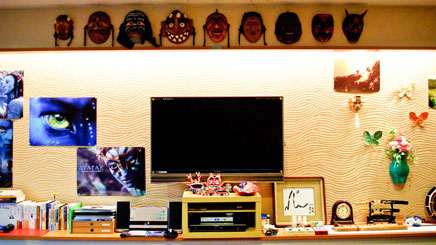
This picture shows the major items in my room. When you look at it overall, what feelings or impressions does it give you? What do those impressions tell you about yourself?

Ilchi Lee room

You can see that my room has different musical instruments, many kinds of butterflies stuck to the wall, and a landscape photograph with the sunlight shining brightly.

Since I like the movie Avatar, I also have several photographs of scenes from the movie, including an extreme close up of one of Jake Sully’s eyes.

Some of my favorite books are also in this picture, such as several by the Buddhist priest Beopjeong, who exemplified living a simple life with few possessions. Above all of these articles are masks showing an array of facial expressions.

When you look at these items, what grabs your attention the most? Why do you think you’re attracted to it?

As we explore ourselves with the different items in my room, we can explore the meaning of Jangsaeng (longevity with health and vitality), which I am thinking about a lot these days. What really fulfills us so that we live long, healthy, productive, and satisfying lives? How can it be done?

Until next week …

Ilchi Lee’s Books Win 2010 Book Awards

By the editor

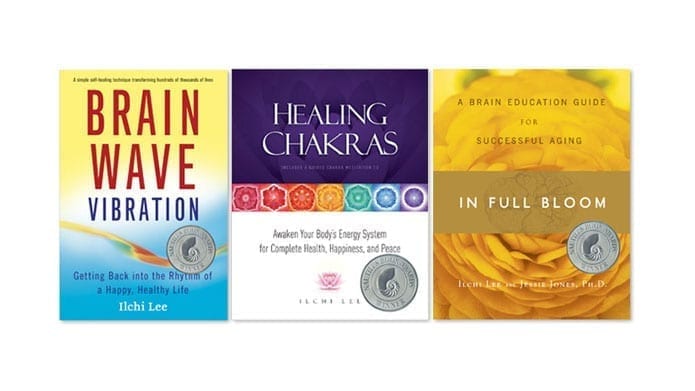
Three of Ilchi Lee’s books won Silver Medals in the 2010 Nautilus Book Awards last month, and one of these also won a 2010 Arizona Glyph Award.

The winning Nautilus Book Awards titles were:

  • In Full Bloom (BEST Life Media 2008) – Aging Gracefully/Retirement category
  • Healing Chakras (BEST Life Media, Second Edition 2009) – Health/Healing/Energy Medicine category
  • Brain Wave Vibration (BEST Life Media, Second Edition 2009) – Personal Growth/Psychology category

3 Ilchi Lee books won 2010 book awards

Now in their 10th year, the Nautilus Awards recognize books and audio books that promote spiritual growth, conscious living, and positive social change, while at the same time stimulating the “imagination” and offering the reader “new possibilities” for a better life and better world.

The Nautilus Book Awards have a unique three-tier system of judging that offers a deliberate course of examination and scrutiny designed to sort and separate books as they are measured against a carefully prepared list of notable characteristics. This process is carried out by three teams of highly qualified, experienced reviewers located across the U.S. whose successful careers as editors, writers, librarians, schoolteachers and bookstore owners are matched with a passion for books that offer new ideas and options for a better world for everyone. Each book is evaluated by at least two judges at each level in 28 subject categories. To see all of the 2010 Award Winners, you can visit www.nautilusbookawards.com.

Healing Chakras also won the 2010 Arizona Glyph Award for Best Interior Layout/Design at a gala banquet at the Phoenix Country Club on May 1, 2010. The Arizona Book Publishing Association, who gave the award, also named it as a finalist in two other award categories:  Psychology/Self-Help and Health/Wellness/Nutrition.

The Arizona Book Awards help to promote and support quality work created by Arizona authors, produced by Arizona publishers, or written about Arizona, and to recognize excellence in craft and creation in the Arizona book industry. Now in their eighth year, the Awards judge books in 33 subject categories and three design categories. One Embodying Arizona Award is given for the best book that meets all three of the above categories. To view all awards winners, visit http://azbookpub.com.

All of Ilchi Lee’s books can be found at www.bestlifemedia.com or in your local bookstore, Dahn Yoga Center, or Body + Brain Center.

E-Newsletter Archive