Blog Archive

Ilchi Lee’s lecture at the United Nations on Brain Education and Global Poverty

By the Editor

Watch the talk Ilchi Lee gave at a panel on poverty and welfare at the United Nations headquarters in New York City hosted by the International Brain Education Association (IBREA) on January 12, 2012.

Mandate of Responsibility

Ilchi Lee - pledge for peaceThis year will see a change in 58 heads of state. These will be the people who have the power to influence the direction of their countries and thus drive the future of the world.

A significant characteristic that defines democracy requires that the leaders of a nation serve the people that comprise it. As members of humanity living in the current era, the citizens of the world’s countries should propose resolutions prior to the elections mandating that those who want to take positions as national leaders must first declare that they will take responsibility for effecting peace on earth and restoring the natural environment. They must give their word before all humankind that they will be held accountable for all of the decisions they make while they are in office and agree to the transparent documentation of all of their actions.

This declaration must also be made by all members of humankind. With a strong sense of ownership, each individual must choose to be responsible for peace on earth and universal well-being, as well as holding his or her national leaders accountable for the same.

I believe that this proposal is the way that the people of all nations can claim their human rights and realize their true value.

IBREA Hosts Brain Education Panel on Eradicating Poverty at the UN

By the Editor

This news comes from the International Brain Education Association (IBREA), who hosted a panel on poverty and welfare at the United Nations headquarters in New York City on January 12, 2012.

After a brief introduction, four panelists spoke on eradicating poverty and promoting equality, which is the 2012 UN ECOSOC agenda.

Ilchi Lee and the other panelists

The Panelists and Other VIPs

Leaders of IBREA

Leaders of IBREA

The first was UNDP’s (United Nations Development Program) chief economist for Latin America, George Molina, who shared that one third of the world’s population lives in poverty and 25,000 people in the world are dying from hunger everyday. The United Nations is actively fighting poverty in 171 countries, however, the number of economically struggling countries has increased. He demonstrated that economic development does not necessarily mean social development. To combat this statistic, he emphasized the importance of social development so that food can reach those who need it.

The second panelist was New York University Professor Joseph Ledoux, author of Synaptic Self: How Our Brains Become Who We Are, and

Giving shoulder massage during Ilchi Lee's talk

Practicing Brain Education

The Emotional Brain: The Mysterious Underpinnings of Emotional Life. Professor Ledoux spoke about how emotional functions work in the brain and how to regulate them. He showed how our emotions affect our thoughts more than our thoughts can control our emotions. He emphasized th importance of early education in preventing severe stress that can lead to fear and anxiety. He told how simple breathing and meditation is helpful for releasing stress.

The next panelist was Ilchi Lee, who is president and founder of IBREA. He expressed that the great latent potential and value of the human brain are demonstrated to the fullest when we give our effort so that all people can be happy together. He taught the participants simple exercises to release stress and guided them

Ilchi Lee - Brain Education for poverty and welfare - captive audience

An Attentive Audience

in giving each other massage to relieve their stiff shoulders. He also mentioned that 58 heads of state will change in 2012, and that 2012 is a very important year. Ilchi Lee gave all the participants his proposal for human peace and welfare, and the recovery of the earth’s natural environment.

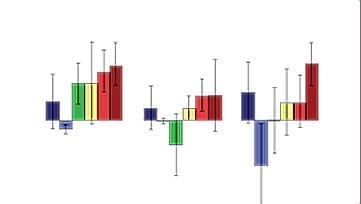
The final speaker was Dan G. Pavel, MD, Director of PathFinder Brain SPECT (Single-photon Emission Computed Tomography) at the Neuroscience Center in Deerfield, Illinois. He presented a study on the effects of Brain Wave Vibration as measured through Brain SPECT technology.

Eighteen UN representatives from different countries attended the conference, as well as UN agencies such as UNDP and UNESCO. The event were covered by MBC Broadcasting (a major South Korean television station), Korean TV, and South South News of the UN.

Attaining True Welfare with Brain Utilization

The gap between the rich and the poor continues to grow on a global scale. Although various efforts have been made to solve this problem, it persists.

We cannot bridge this gap until each of us discovers the latent potential inherent within us. This potential comes from our brain. In fact, our brain’s latent potential and value are demonstrated to the fullest when we give our effort so that all people can be happy together. That’s because our brain instinctively wants health, happiness, and peace not only for ourselves, but also for everyone around us.

Ilchi Lee - hope despite poverty with Brain EducationThe best word to describe this inherent objective of our brain is “welfare.” Welfare involves each individual living a life of fairness, justice, and happiness. It does not only signify material happiness, but spiritual happiness as well.

The quality of each person’s life can be enhanced when we go beyond the values of our own lives to achieve true welfare in society for all people. That’s because every member of humankind breathes the same air, drinks the same water, and lives on the same planet. There isn’t any meaning in defense or competition, because we exist as a network of relationships, connected through interaction.

However, we are currently faced with social realities in which justice fights against justice, and religions that pursue the Truth are in conflict with each other. It grows increasingly difficult to differentiate between right and wrong or black and white.

Therefore, solving every problem has to start with compassion and the recovery of each individual’s human character and conscience. With this backbone of compassion and conscience, we must make an effort to integrate the diverse conflicting factors of society, such as between governments and individuals, for-profits and non-profits, and conservative and progressive.

In the 21st century, we are already witnessing a merging of cultures in which there is a synergistic interplay of personal and collective advantages as our brain evolves. I believe that the key word for the 21st century is “fusion.” Now is a time for us to utilize all the wisdom and knowledge that has been discovered for the goal of welfare; it’s a time that requires the fusion of diverse social perceptions.

When I refer to “fusion,” however, I mean fusion that takes place through individuals’ free will, not fusion imposed by a single, autocratic dictator. I’m describing a situation in which all members of humankind discover the value and latent potential in their brain and use it naturally to awaken themselves. We don’t need someone to tell us what to do or to explain the moral value of such obligations anymore.

Our brains have a natural desire for fusion—the integration and application of all information—as well as an instinctive tendency to pursue collective benefit through synergy. Through a five-stage process of awakening the brain with breathing and meditation, the Brain Education system I’ve developed helps people unlock their brain’s potential and restore the innate human quality that seeks synergy and the actualization of welfare for all humanity. It helps them understand all aspects of their brain; understanding one’s brain is, in essence, knowing oneself. In the process, Brain Education helps people bring out their creativity and discover their worth and the value of their brain, as well as that of others. It thus facilitates and encourages better communication and fusion throughout society. Each of us has the responsibility to develop the capabilities of our brain for the benefit of all humankind.

With the realization of our value and potential, the brain is ready to take action. So I propose that we go beyond Brain Education to brain utilization. We must ask ourselves: “How can we make the best use of our brains’ potential to solve global problems such as poverty? How can we motivate ourselves to continue developing our untapped power until it benefits all of humanity, and we solve the many problems that have been tormenting us?”

For this purpose, science will have an important role. It will be necessary to demonstrate the effect of brain utilization on creating true welfare throughout the world. We absolutely need this evidence, not simply as a statistical or scientific exercise, but for us to develop greater confidence, and in doing so, motivate ourselves to develop our brain continuously. Therefore, I urge neuroscientists, scholars, and social scientists to demonstrate the link between brain utilization and true welfare for all humanity.

Book Signing for The Call of Sedona at Barnes & Noble Summerlin

By the Editor

On Sunday, January 8, 2012, a crowd of over 250 people gathered at the Barnes & Noble in the Summerlin area of Las Vegas to hear Ilchi Lee speak on his latest book, The Call of Sedona: Journey of the Heart. After his talk, the author signed books and took pictures while violin music played in the background.

Part 1


Part 2


Part 3

E-Newsletter Archive